
You must heard many people avoiding dietary products stating that they are lactose intolerant. You might have also experienced intestinal gas and a bloated stomach after consuming milk.
Lactose intolerance is a common digestive issue affecting millions of people. It is the inability of the body to produce lactase, an enzyme that is required to break down lactose, the sugar found in milk and dairy products. Hence, individuals with lactose intolerance cannot digest milk and dairy items and experience symptoms like gas, stomach cramping, nausea, vomitting and diarrhoea. While lactose intolerance can be uncomfortable but does not mean you have to completely cut off milk products from your diet. With the proper nutrition management and the right food choices, it is possible to have a balanced eating pattern.
The best gastroenterologist in Kolkata stated that the varying degree of lactose intolerance depends on the deficiency of lactase in the body. Some individuals can tolerate some lactose-containing foods by adjusting the amount. On the other hand, some people can’t even digest a small portion.
Milk and dairy products are important sources of calcium, Vitamin D, B12 and other minerals. Also, lactose is essential to increase the absorption of zinc, magnesium and calcium. Hence, understanding how severe you are lactose intolerance is important to find alternative nutritional supplements.
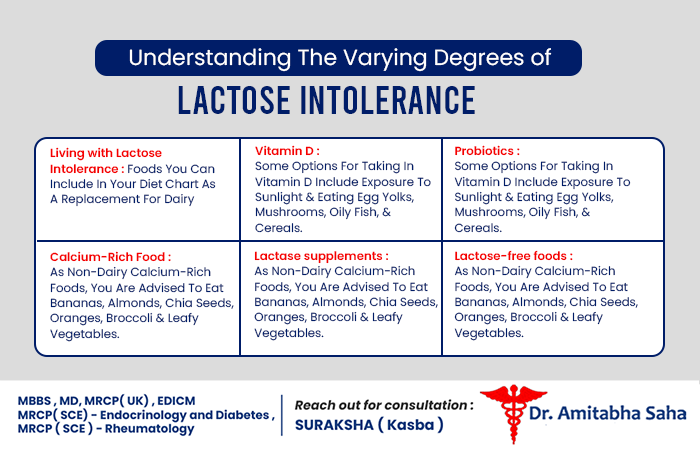
Here are food items you can include in your diet chart as a replacement for dairy, as suggested by the best gastroenterologist in Kolkata.
Calcium is an essential nutrient for maintaining the strength of your teeth and bones. Milk is the best available source of calcium. As non-dairy calcium-rich foods, you are advised to eat bananas, almonds, chia seeds, oranges, broccoli and leafy vegetables.
Vitamin D is important for calcium absorption and for the prevention of deformities and bone pain. Some options for taking in Vitamin D include exposure to sunlight and eating egg yolks, mushrooms, oily fish, and cereals.
You can take lactase supplements to help the body break down lactose into glucose and galactose which is easy for the body to digest. They come in both tablet and capsule form. However, a gastroenterologist in Kolkata suggests consulting a doctor to check if you are allergic to it.
Adding probiotics to your diet aids in lactose intolerance. Some probiotic-rich foods include yoghurt, paneer, cottage cheese, idli and dosa, whole wheat bread, soya beans and beetroot. They produce an enzyme known as beta-galactosidase to break down lactose and enable to body to digest it.
If you are craving dairy products, you can always have lactose-free foods. There are a lot of low-lactose products like butter, hard cheese, yoghurt and sour cream. These products have reduced lactose or have already broken down so that they can be digested.
There is no cure for lactose intolerance. However, to make up for the loss of nutrients that come from dairy products, you can manage your diet with lactose-free food items and continue to live a healthy life. If you are still having digestive issues, make sure to talk to the best gastroenterologist in Kolkata.