
More and more people are reporting digestive issues more than ever. From chronic bloating and constipation to more complex conditions like Irritable Bowel Syndrome (IBS) and Irritable Bowel Disease (IBD), concerns related to gut problems are constantly on the rise.
This sharp increase is mainly attributed to lifestyle changes, poor dietary habits, stress and even overuse of antibiotics. The search to get rid of troublesome symptoms has brought probiotics and prebiotics into the spotlight.
Commercials for gut-friendly supplements, yoghurt and fermented foods are everywhere, claiming to improve your digestion. However, most people are not even aware of what these products actually are. The question also arises: Do you really need them, or is it just a wellness trend?
In this blog, we will break down what probiotics and prebiotics are, what their function is and whether they are at all necessary, as stated by the best gastroenterologist in Kolkata, Dr. Amitabha Saha.
Probiotics are live microorganisms, mainly beneficial bacteria, that help to maintain and restore the balance of the gut microbiome. Often referred to as the “good bacteria”, they help with the digestion of food and even improve the symptoms of illness.
Prebiotics are non-digestible fibres that the body does not digest, but they serve as food for these beneficial bacteria. In other terms, they help beneficial bacteria to thrive. Prebiotics are naturally found in high-fibre and plant-based foods.
Both probiotics and prebiotics naturally come from food and also from dietary supplements. When mixed, probiotics and prebiotics are known as synbiotics.
Sources of probiotics
Sources of prebiotics
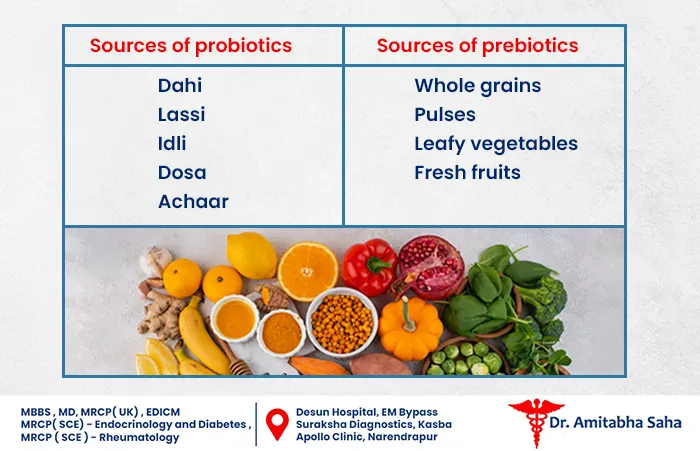
As stated, there is a recent trend in food and beverage products labelled as ‘probiotics’ and ‘prebiotics’. The products often, as they often say, “support a healthy gut” and “boost the immune system”.
According to the opinion of Dr. Amitabha Saha, the best gastroenterologist in Kolkata, both probiotics and prebiotics are effective, but how well they work depends on factors such as individual health concerns and consistency of use, as well as dosage.
For example, your doctor might suggest probiotics if you are on antibiotics to prevent their side effects, especially diarrhoea. Taking antibiotics destroys the beneficial bacteria in the gut. Probiotics help to replenish the good bacteria.
Moreover, as probiotic strains introduce good bacteria into the gut, they help to reduce the symptoms of constipation, bloating and abdominal pain in IBS and mild cases of IBD. However, it is important to understand that not all strains are equally effective, and everyone might not respond in the same way.
Just like probiotics, prebiotics are also necessary. Without enough prebiotics, probiotics will not work to support a healthy gut. Dr. Amitabha Saha recommends that individuals include foods in their diet that are sources of prebiotics to feed the gut bacteria and help them multiply.
Both probiotics and prebiotics are backed by science, but not every patient with digestive issues needs them. Make sure you consult the best gastroenterologist in Kolkata, like Dr. Amitabha Saha, to determine if these products are right for you. He will evaluate your symptoms and prepare the right course of treatment.