Blood in Stool: Common Gastrointestinal Causes Explained
Noticing blood in your stool, whether it’s just a few drops or a visible presence, is alarming. While some individuals tend to overlook the condition, mostly due to embarrassment or fear, it is an indication that the body is having serious health issues. It is a sign that something is not right in the digestive tract and needs to be treated.
So, if you are seeing blood in your poop or on the toilet paper, it is worth having a conversation with the best gastroenterologist in Kolkata, like Dr. Amitabha Saha, for a thorough and accurate diagnosis.
What Does Blood In The Bowel Movement Indicate?
Rectal bleeding is not a disease; rather, it is a symptom of an underlying problem in the gastrointestinal (GI) tract, be it the esophagus or the intestines.
Blood in your stool can come in various ways. In fact, the colour and quantity of blood can give hints about what’s going on in your body.
- Bright red blood: It indicates bleeding from the colon, rectum or anus.
- Dark or tar-like: It is a sign of concern in the stomach or small intestine.
- Occult blood: It is not visible to the naked eye and needs to be detected through tests.
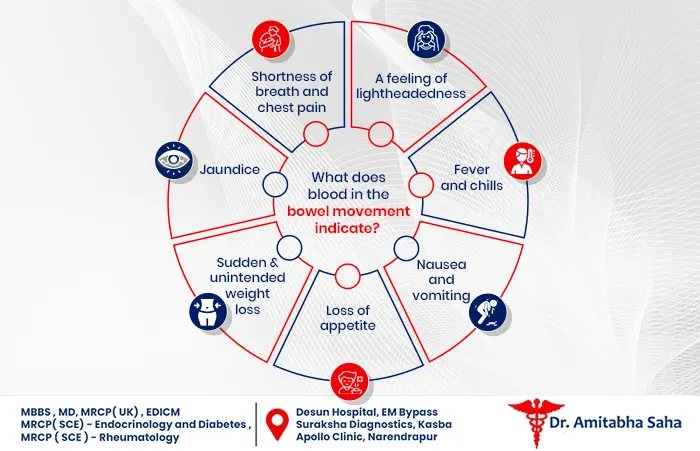
It is to be noted that even if your bleeding in the poop is intermittent, it must not be ignored. Prompt medical evaluation is essential in such cases. Moreover, the presence of blood can also be accompanied by the following symptoms that are more worrisome.
- Severe abdominal, pelvic or rectal pain
- Shortness of breath and chest pain
- A feeling of lightheadedness
- Fever and chills
- Nausea and vomiting
- Loss of appetite
- Sudden and unintended weight loss
- Jaundice
Be sure to pay attention to the minute changes in your doctor and discuss everything with your doctor.
Common Gastrointestinal Causes Associated With Blood In The Stool
The best gastroenterologist in Kolkata, Dr. Amitabha Saha, stated that blood in the stool is caused by a variety of gastrointestinal conditions. Here are some of them.
- Haemorrhoids: Though it is not a direct gastrointestinal issue, these swollen veins are located in the anorectal area, which bleeds, especially due to straining during bowel movements.
- Anal fissures: These are tiny tears located in the lining of the anus, often caused by frequent constipation. They result in sharp pain and bleeding.
- Polyps: These are abnormal, benign growths on the inner lining of the colon or rectum. They often bleed and, if left untreated, turn cancerous.
- Inflammatory bowel disease (IBD): Conditions like Crohn’s disease and ulcerative colitis are characterised by inflammation in the digestive tract, leading to ulcers and bleeding in the stool.
- Diverticulosis: It refers to small pouches in the colon wall called diverticula. When unaddressed, they become inflamed and rupture, leading to painless bleeding in the poop.
- Peptic ulcers: They are open sores that develop on the stomach lining and duodenum, resulting from infections and prolonged use of NSAIDs. They cause black and tarry stools along with bleeding.
Conclusion
If you are dealing with blood in your stool, your body is telling you something that should not be ignored or waited for other symptoms. Consult Dr.Amitabha Saha, the best gastroenterologist in Kolkata, for accurate treatment backed by years of experience and expertise.