
The functioning of the thyroid gland is often associated with how a person feels hot or cold. This is because the hormones produced directly affect the body’s metabolism. Those suffering from either overactive or underactive thyroid are always hot or cold, but they are never comfortable.
However, one rarely known symptom of thyroid disorders is fluctuations in a person’s emotional well-being, which leads to sudden changes in mood, including anxiety, depression and irritability.
In this blog, Dr. Amitabha Saha, the best thyroid specialist in Kolkata, discusses how thyroid dysfunction is responsible for causing emotional disturbances.
The thyroid gland is a butterfly-shaped organ that produces essential hormones required for maintaining various bodily functions such as controlling the body’s metabolic rate, weight, heart rate, circulation and even bone health. It even influences the psychological well-being of individuals, like how a person thinks and feels.
When the thyroid functions normally, it ensures that all the vital processes of the body work smoothly. On the other hand, whenever there is a disruption in the thyroid gland, i.e. if it produces too much or too little hormones, it leads to an imbalance in the functioning of the body that eventually causes mood changes.
But how? Let know from one of the best thyroid specialists in Kolkata, Dr. Amitabha Saha.
Thyroid disorders are of two types: Hyperthyroidism and Hypothyroidism. Both these conditions have a negative impact on mental health. However, thyroid dysfunction also causes other physical symptoms that often overlap with emotional issues.
Take a closer look at how they are related to changes in emotional regulations.
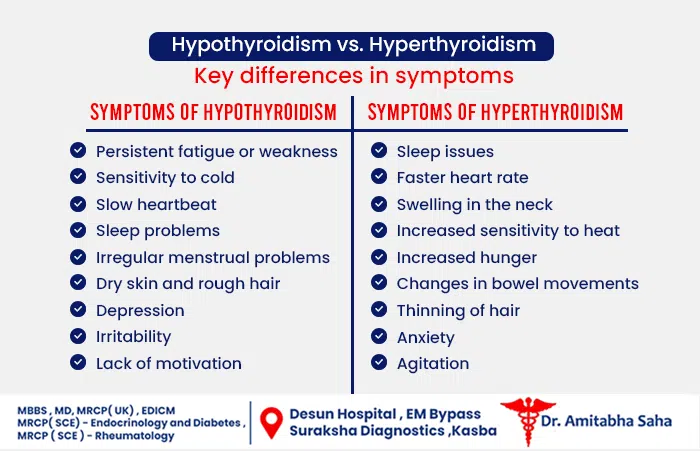
An individual is said to be suffering from hypothyroidism if the thyroid gland is unable to produce enough hormone. Some of the notable symptoms associated with this condition are persistent fatigue or weakness, sensitivity to cold, slow heartbeat, sleep problems, irregular menstrual problems, dry skin and rough hair. In addition to these signs, individuals with hyperthyroidism also have depression, irritability, lack of motivation and interest in activities.
They find it difficult to control the stability of their mind and often have sudden outbursts of frustration and anger.
The condition hyperthyroidism is characterised by excessive production of thyroid hormones. People with this disorder have sleep issues, faster heart rate, swelling in the neck, increased sensitivity to heat, increased hunger, changes in bowel movements and thinning of hair.
Whenever there is an overproduction of thyroid hormones, the nervous system gets overstimulated, which makes it hard for patients to cope with stress. As a result, they suffer from anxiety, restlessness, agitation and irritability.
In the majority of cases, the psychological issues caused by thyroid dysfunction can be brought under control with the right treatment. For this, patients are required to consult the best thyroid specialist in Kolkata, like Dr. Amitabha Saha, who will thoroughly examine the symptoms and recommend certain tests for assessment of the hormone levels. Based on the results, they will be prescribed medicines with lifestyle modifications.
In some cases, some patients even develop severe mental health issues. When psychological problems become acute or do not go away even after treatment, doctors refer them to a therapist who has expertise in treating emotional disorders.
If you are experiencing any of the symptoms of thyroid dysfunction, don’t keep the condition as it is. Go for early diagnosis and treatment to regulate your thyroid hormones and improve your emotional well-being.