
Have you ever noticed that your migraines have become more severe and frequent during certain times of the year? In that case, you are not alone. You will find many patients complaining that their symptoms of migraines have worsened with the seasons.
But why is it so? Let us know.
A migraine is a condition that causes intense and throbbing pain on one side of the head. They are similar to headaches, but the severity is more than that. Most often, people with headaches can go about their day, but migraines make daily activities difficult.
In some patients, the condition is accompanied by symptoms such as nausea, vomiting and even sensitivity to light and noise. Moreover, the pain can last for a few hours and also for days.
Different individuals have different migraine-related triggers. However, one factor that is overlooked is seasonal change. While for people, the symptoms deteriorate during the cold and dry weather, others might notice a frequency in the pain during heat and humidity.
Environmental factors, such as seasonal allergies, can flare up migraine attacks due to their impact on sleeping patterns. Individuals who are prone to seasonal allergies struggle to get adequate rest due to the ongoing inflammation and swelling in the nasal passages.
Moreover, multiple studies also reported that migraines are common in patients with allergic rhinitis, which spikes in certain seasons.
Some of the other reasons are:
While you can’t change the weather, you definitely take precautionary measures to prevent a migraine attack from spiking.
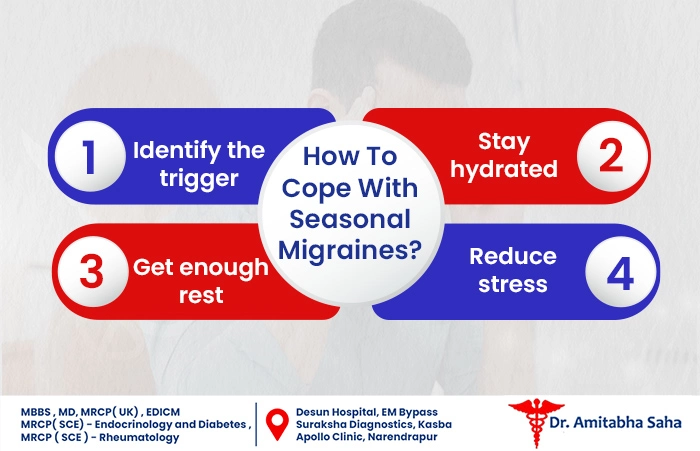
It is important to know how your body is responding to weather changes and take the necessary steps to manage the triggers. However, if the pain is still not improving, seek medical advice from a general practitioner for proper treatment.