
Rheumatoid arthritis is an autoimmune condition which is characterised by inflammation in the joints. It leads to pain, redness, swelling, stiffness and reduced mobility. Over time, when left untreated, it results in permanent joint damage and complications.
For many patients, the first line of treatment to get immediate relief is painkillers. Anti-inflammatory painkillers and steroids can relieve the symptoms of rheumatoid arthritis for the time being.
But is the prolonged use of these medicines safe in the long run? A leading rheumatoid arthritis doctor in Kolkata, Dr. Amitabha Saha, provides his insights on the issue.
Painkillers are usually prescribed in the treatment of rheumatoid arthritis (RA) to provide relief from acute pain as a temporary option until the disease-modifying drugs start to work.
These medicines do not prevent joint damage or halt the progression of the disease, but can manage the discomfort, like mobility issues, and improve the quality of life.
The main types of painkillers for rheumatoid arthritis are:
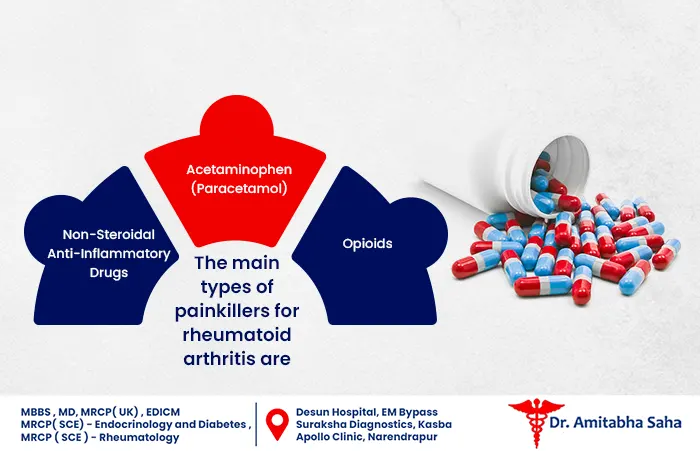
While these drugs are found to be effective in the short term, they come with certain risks, especially when used for months and years without treating the root cause, says Dr. Amitabha Saha, a reputed rheumatoid arthritis doctor in Kolkata.
Continuous dependency on pain relievers can alleviate the symptoms while the joints deteriorate silently. Here are some of the side effects of their long-term consumption.
1. Gastrointestinal issues
This is a major concern among individuals, especially for those with pre-existing digestive issues. Many of us are not aware that painkillers irritate the stomach lining. Over time, they increase the risk of heartburn, acid reflux, ulcers, gastritis and bleeding.
2. Kidney damage
Some pain medicines, particularly NSAIDs, lead to kidney damage when you take them for a long time. They reduce blood flow to the kidneys by constricting the blood vessels, thereby interfering with their filtering abilities. Gradually, it results in permanent kidney failure.
3. Liver toxicity
Paracetamol is generally safe and effective for mild to moderate pain. However, when taken in high doses or for a long period, it can prove to be toxic to the liver. Taking too much paracetamol heightens the risk of liver failure when combined with other medicines like NSAIDs.
4. Heart problems
Long-term use of certain painkillers, particularly NSAIDs, has also been linked to an increased risk of serious cardiovascular complications like heart attack, cardiac arrest, fast heart rate and even stroke. These risks are especially concerning for individuals with rheumatoid arthritis, who already face a higher baseline risk of heart disease due to chronic systemic inflammation.
NSAIDs should only be used when necessary and never as a long-term solution. It is important to use the lowest dose possible and not to exceed the maximum daily dose. Moreover, avoid taking multiple types of painkillers to reduce the risk of side effects.
For example, you should use proton pump inhibitors like pantoprazole and omeprazole with pain relievers to protect the stomach lining. Once DMARDs or biologic therapies begin controlling the underlying inflammation for rheumatoid arthritis, make sure to decrease the intake of such medicines.
Moreover, patients can apply diclofenac or ibuprofen in gel or cream form as a safer alternative to oral tablets. They are absorbed through the skin and enter the bloodstream in much smaller amounts, which significantly reduces the harmful effects.
Painkillers might provide temporary comfort, but refrain from using them for long. Consult a rheumatoid arthritis doctor in Kolkata, like Dr. Amitabha Saha, to explore other treatment options that would cure the disease and not just the pain.