
Winter is loved by many, as it brings a cosy atmosphere, holiday celebrations and hot beverages, but for some, it is all about the stiff and achy joints. Many people with existing joint problems notice that their pain gets worse during the colder months, making daily activities challenging.
But why is it so? Let’s understand from a joint pain specialist doctor, Dr. Amitabha Saha.
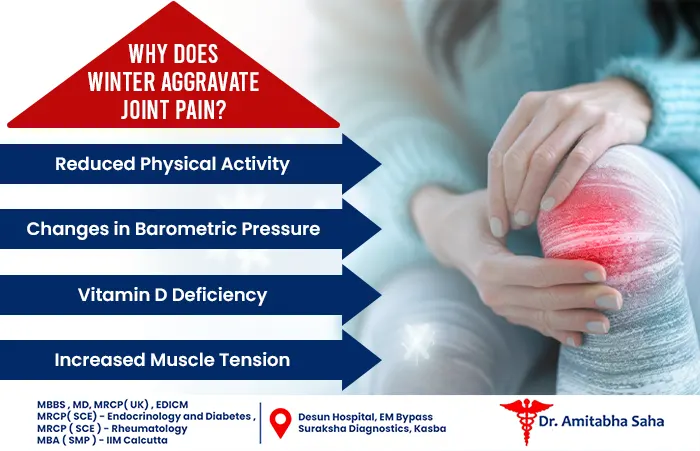
Reduced Physical Activity
With shorter days and a drop in temperature, many people prefer to stay indoors. The majority adopt a sedentary lifestyle, due to which the muscles around the joints weaken. The lack of activity increases strain and intensifies the pain.
Changes in Barometric Pressure
During the winter months, the barometric pressure decreases. This causes the joint tissues to expand, which results in their swelling. The expansion also causes inflammation, making joint pain worse.
Vitamin D Deficiency
The body produces vitamin D when the skin is exposed to the sun’s rays. Reduced sunlight exposure and spending more time indoors lead to vitamin D deficiency, which is one of the primary reasons behind fatigue and bone pain.
Increased Muscle Tension
Studies have shown that cold temperatures cause the tissues around the joints to contract in order to conserve heat. While this is the body’s natural mechanism, it also means that the joints receive less fluidity of movement. As a result, the joints feel stiff and achy, especially in the mornings.
While winter-related joint pain can be frustrating, it is manageable with effective strategies. Dr. Amitabha Saha, a reputed joint pain specialist doctor, recommends the following tips.
If your joint pain becomes more severe and hinders your mobility to a great extent, it is better to consult a joint pain specialist doctor. Accurate treatment can help prevent complications and improve joint health.
Joint pain during the winter does not need to control your life. You can seek expert guidance from a joint pain specialist doctor like Dr. Amitabha Saha, to manage the pain brought on by the cold and continue to enjoy the season.