
Have you recently experienced a sudden and horrible pain in your joints? Well, this is a symptom of gout, which is a type of arthritis causing pain and swelling in the joints. Gout happens when there is too much uric acid in the blood, resulting in the formation of crystals that accumulate around the surrounding tissues. Excess deposition of uric acid is known as hyperuricemia which is usually a silent disease that most of the time goes unnoticed.
The prevalance of hyperuricemia is increasing; however, its management approach remains suboptimal. Normally two-thirds of the urine is produced by the body, while the rest comes from the diet, often in the form of purines. Many animal and plant-based foods contain purines, which your body converts to uric acid. When the kidneys fail to flush out excess urine, it gets deposited in the body as needle-like crystals, leading to sudden gout attacks.
Hyperuricemia treatment mainly involves cutting down purine-rich foods from your diet along with taking uric acid-lowering medicines. So, what are the foods that contain high amounts of purines? In this blog, we will share how diet plays a crucial role in influencing hyperuricemia management and the foods that you need to avoid.
As already mentioned, limiting purine-rich food is highly beneficial when it comes to controlling the symptoms of hyperuricemia. Moreover, it helps people to prevent developing the condition even if they have not developed the disease yet. Keeping a check on your diet is also important for decreasing the complications of hyperuricemia, like kidney stones.
It is also true that some people think that only diet alone can keep uric acid levels under control, but it is not so. Besides certain food items, you are required to take medicines as a part of your hyperuricemia treatment. hyperuricemia treatment. You are also required to have your uric acid levels checked at regular intervals to let your doctor monitor the progression of the symptoms and make necessary adjustments in the treatment if required.
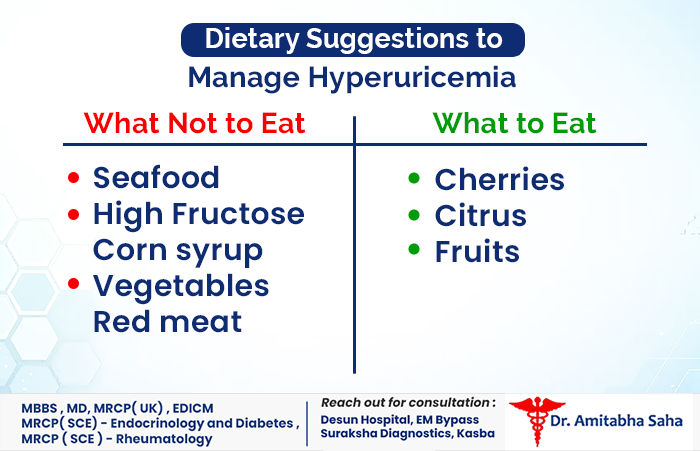
Here are a few suggestions about what to eat and avoid that help manage high uric acid.
Dietary Suggestions To Manage Hyperuricemia
Below are the foods that keep uric acid levels under control.
Reducing uric acid levels requires a holistic approach, including dietary adjustments. If you are experiencing extreme pain quite frequently, seek hyperuricemia treatment without any delay and start taking the required medicines to prevent mobility issues and lead a healthier life.