
Have you noticed that people, even in their 20s and 30s, are getting diagnosed with high uric acid? The condition which primarily affected older individuals is now increasingly becoming common among the younger generations.
But why is that high uric acid taking the form of a major health concern? Is there anything that can be done to prevent elevated uric acid levels before they lead to other painful conditions?
Let’s discuss this in detail. But first, understand what high uric acid is.
Uric acid is actually a waste product which is naturally formed by the body when it breaks down purines (compounds found in human cells and in certain foods and beverages like red meat, seafood and alcohol).
Uric acid is filtered by the kidneys and excreted through urine. However, health concerns arise only when there is excess production of uric acid or if the kidneys fail to eliminate enough of it.
In the medical context, the condition is known as ‘hyperuricemia’, which, when not kept in check, results in the formation of sharp crystals in the joints, leading to painful gout attacks. Ignoring timely high uric acid treatment also increases the risk of kidney stones and other metabolic disorders.
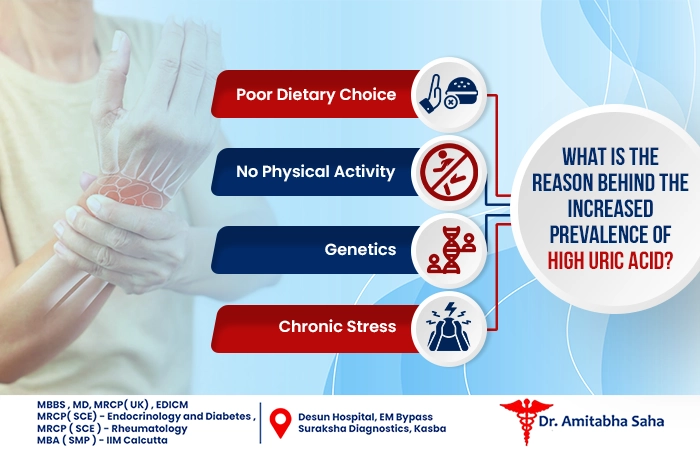
Developing high uric acid is not the result of a single cause. It has started to affect individuals even in lower age brackets due to a combination of factors. Dr. Amitabha Saha, a reputed internal medicine and critical care medicine specialist and well-appreciated for providing high uric acid treatment, gives a glimpse of what is making hyperuricemia a growing health issue.
For those with high uric acid, regular monitoring is advisable to keep the levels under check. Your healthcare provider will recommend periodic blood tests to prepare a personalised high uric acid treatment for better health outcomes.