
There was a time when night meant rest.
Darkness signaled the body to slow down. The mind detached from activity. The nervous system shifted from alertness to recovery. Sleep was not optional. It was part of survival.
Today, night has lost its meaning.
Lights remain on. Screens remain active. Work continues beyond sunset. The brain remains stimulated long after the body is exhausted.
Sleep has quietly become one of the first sacrifices of modern life.
Not intentionally. But consistently.
And the consequences are now visible inside clinics, hospitals, and human biology.
Modern culture has redefined productivity.
Waking early and sleeping late is often seen as dedication. Continuous availability is seen as responsibility. Rest is seen as delay.
Many individuals believe they can function normally with five or six hours of sleep.
Initially, it appears true.
They remain awake. They complete tasks. They continue their routines.
But beneath that appearance, the body begins to accumulate damage.
Sleep is not merely the absence of wakefulness. It is an active biological process.
During sleep, the brain clears metabolic waste. Hormones reset. Blood pressure falls. The cardiovascular system recovers.
Without sleep, recovery does not occur.
And without recovery, deterioration begins.
The human nervous system operates in two primary modes—activation and recovery.
Activation prepares the body for effort. Recovery restores balance.
Sleep is when recovery dominates.
But when sleep duration is reduced, activation remains prolonged.
Stress hormones remain elevated.
Heart rate remains higher than normal.
Blood vessels remain constricted.
Over time, this increases baseline blood pressure.
Hypertension develops—not from sudden injury, but from chronic absence of recovery.
The heart continues to work harder, even when the body appears to rest.
This continuous strain weakens cardiovascular resilience.
Sleep directly regulates metabolic health.
During normal sleep, insulin sensitivity improves. Glucose metabolism stabilizes.
But sleep deprivation disrupts this balance.
Insulin becomes less effective.
Blood sugar begins to rise.
Even a few nights of poor sleep can reduce insulin sensitivity.
Over months and years, this contributes to diabetes development.
This explains why individuals with chronic sleep deprivation often develop metabolic disorders, even without significant dietary change.
The body cannot regulate energy properly without adequate recovery.
Sleep is part of metabolic control.
The brain is the most energy-demanding organ in the body.
It requires recovery to maintain clarity, memory, and emotional stability.
Sleep allows neural circuits to reset.
Without sleep, neural efficiency declines.
Attention weakens.
Reaction time slows.
Decision-making becomes impaired.
Memory formation becomes less effective.
This cognitive decline is not always obvious immediately.
It appears gradually.
Individuals may notice increased forgetfulness, reduced focus, and mental fatigue.
Over time, chronic sleep deprivation increases the risk of neurodegenerative conditions.
The brain ages faster without adequate sleep.
Not visibly—but functionally.
One of the most serious consequences of sleep deprivation is increased stroke risk.
Sleep regulates blood pressure, vascular tone, and inflammatory balance.
Without sufficient sleep, blood pressure remains elevated for longer periods.
Inflammation increases.
Blood vessels become more vulnerable.
The protective nighttime drop in blood pressure does not occur.
Over time, this increases the likelihood of vascular events.
Stroke appears suddenly—but its foundation is built gradually.
Sleep deprivation contributes silently to that foundation.
Sleep deprivation does not only affect physical health.
It affects emotional stability.
The brain’s emotional regulation centers become more reactive.
Irritability increases.
Stress tolerance decreases.
Minor problems feel overwhelming.
Emotional resilience weakens.
This is not due to personality change.
It is due to neurological fatigue.
The brain cannot regulate emotions effectively without recovery.
Sleep stabilizes emotional systems.
Without it, emotional imbalance emerges.
There is a common belief that sleeping less allows more productivity.
In reality, the opposite occurs.
Sleep-deprived individuals experience reduced cognitive efficiency.
Tasks take longer to complete.
Errors increase.
Decision quality declines.
Mental fatigue accumulates.
Although more hours are spent awake, fewer hours are spent functioning effectively.
Productivity measured in time may increase.
Productivity measured in efficiency decreases.
Sleep is not lost time.
It is performance preparation.
Without it, performance declines.
Sleep deprivation does not only affect individuals.
It affects society.
Healthcare costs increase due to hypertension, diabetes, heart disease, and neurological conditions.
Workplace productivity declines.
Accident rates increase.
Decision-making errors increase.
Entire systems are affected by the biological consequences of sleep loss.
The cost is not always immediately visible.
But it accumulates over time.
Sleep deprivation becomes both a medical and economic burden.
Several factors contribute to reduced sleep duration.
Artificial lighting delays the body’s natural sleep signals.
Screens emit blue light that suppresses melatonin.
Work schedules extend beyond natural circadian rhythms.
Psychological stress prevents mental relaxation.
The brain remains stimulated late into the night.
Even when individuals attempt to sleep, the nervous system remains partially activated.
Sleep becomes delayed, fragmented, and less restorative.
The quantity and quality of sleep both decline.
Some individuals believe they have adapted to sleeping less.
In reality, the body does not fully adapt.
It compensates temporarily.
But the biological need for recovery remains.
Damage accumulates silently.
The cardiovascular system weakens.
Metabolic regulation deteriorates.
Neurological function declines.
Sleep deprivation is cumulative.
Its effects intensify over time.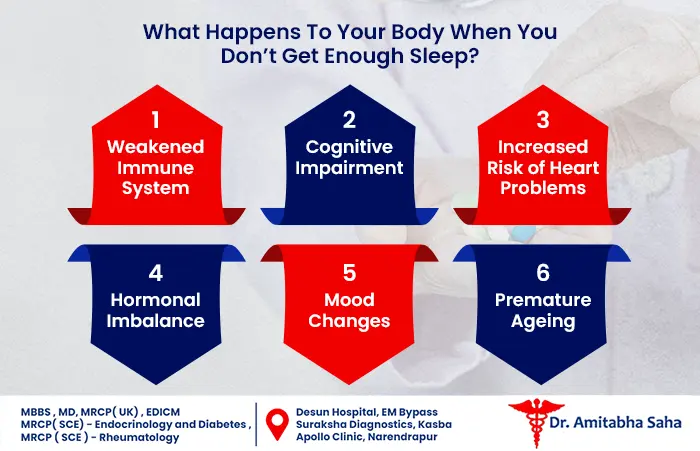
Sleep is when the body performs essential maintenance.
Cells repair themselves.
Hormones rebalance.
The immune system strengthens.
The brain clears toxic metabolic byproducts.
Without sleep, these processes remain incomplete.
Incomplete recovery leads to gradual decline.
Sleep is not inactivity.
It is biological restoration.
Without restoration, health cannot be sustained.
Sleep deprivation has become normalized.
Individuals accept fatigue as routine.
They accept poor sleep as unavoidable.
They underestimate its consequences.
But sleep deprivation is not harmless.
It affects nearly every system in the body.
It increases the risk of chronic disease.
It accelerates biological aging.
It weakens resilience.
This epidemic spreads silently.
Not through infection.
But through lifestyle.
Sleep is not optional for health.
It is essential.
It protects the brain, heart, metabolism, and emotional stability.
Sleep deprivation does not produce immediate symptoms.
But its long-term consequences are profound.
In the modern world, protecting health requires protecting sleep.
Because sometimes, the most dangerous damage occurs not during activity—
But during the absence of recovery.