
Do you often experience painful gout attacks? Are you worried about constant high uric acid levels? What if the key to managing the disorder lies in your diet?
High uric acid, medically known as hyperuricemia, occurs when the body breaks down purines found in certain foods and beverages. Normally, purines are dissolved in the bloodstream and are filtered by the kidneys, which eventually leave through urine.
However, when there is an excess accumulation of uric acid in the blood, it leads to several complications like gout, kidney stones and joint damage.
Hyperuricemia is very much treatable, and high uric acid treatment focuses on medications which reduce the production of high uric acid or improve its elimination through the kidneys. However, in recent years, many individuals have resorted to dietary changes to manage the condition.
One approach is to adopt a plant-based diet, which includes vegetables, legumes and whole-grain foods. But is this way of eating really effective?
Let’s explore
A healthy plant-based diet including fresh fruits, vegetables, whole grains, nuts and seeds has shown promising results in keeping uric acid under control.
Previously, it was thought that the avoidance of high-purine foods was appropriate for patients with hyperuricemia. However, a complete purine-free diet does not exist, but the amount of purines in foods varies.
Unlike animal-based sources like meat, fish, or seafood, plant-based foods have lower purine content and do not have the same negative effects. In fact, these foods have high fibre, antioxidants and other nutrients which aid in digestion and promote weight loss, one of the main factors in lower uric acid levels.
Moreover, plant-based foods also maintain an alkaline pH in the body that supports better kidney function and promotes efficient excretion of uric acid.
According to Dr. Amitabha Saha, known for his outstanding high-uric treatment, patients who have started following a plant-based diet experienced great improvements in their overall health.
It not only prevents uric acid flare-ups but also reduces blood pressure, cholesterol and blood sugar levels. Dr. Saha emphasises that managing high uric acid is not about medications; rather, it involves following a holistic lifestyle for long-term well-being.
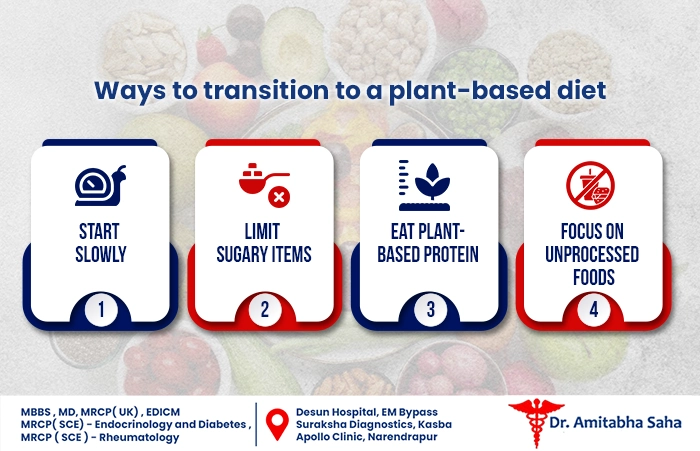
If your eating habits consist more of animal-based products, here are the following ways you can follow for a smooth transition to a plant-based diet.
While medicines are effective for high uric acid treatment, dietary changes are an addition to prevent uric acid accumulation and flare-ups. You can get in touch with Dr. Amitabha Saha for personalised guidance on eating to support complete healing.