
Cardiovascular issues have long been thought to affect the middle-aged or older age group. For many years, ageing was considered a leading risk factor for an increased likelihood of a heart attack. But that widely held perception no longer stands true.
This has become a major health concern and brought up an important question of whether heart-related issues are on the verge of turning into an epidemic.
Let’s find out what medical professionals, as well as researchers, have to say on this.
It is not uncommon these days to hear of someone who seems to be fit but suddenly died of a heart attack in their 30s or 40s. The recent example that grabbed the attention of people was the sudden demise of actress Shefali Jeriwala, who died at the age of 42 due to a sudden cardiac arrest.
This has prompted everyone to think, so is it an epidemic? Right now, there is no straightforward yes or no answer to the question. It is because not all areas within the country have reported high rates of heart attacks. However, it cannot be denied that the trend is quite alarming. Unexpected deaths among 20–30-year-olds due to heart attacks are sparking public health probes.
If this continues, it will not take much longer to label it as a cardiovascular disease epidemic by doctors and experts.
The increase in the cases of heart attacks among Indians is fuelled by the following factors.
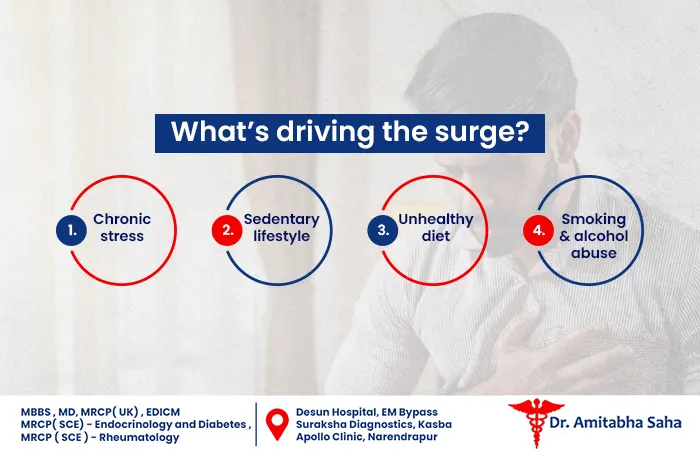
Routine cardiovascular assessment, along with adopting a healthy lifestyle, is crucial for identifying complications and reducing risk. They are advised to follow a balanced diet combined with exercise and stress management to lower their chance of sudden heart attacks.
The sudden spike in heart attack rates among young adults is a wake-up call. The majority of sudden cardiac arrests can be prevented. Hence, it is suggested to take proactive steps before it is too late.