
Approximately 10% of adults have asymptomatic hyperuricemia once in their lifetime. It is a condition which is characterised by elevated uric acid levels in the blood without any noticeable symptoms. Many patients do not seek treatment for hyperuricemia, considering it to be not so serious. However, studies reveal, over time, it can predispose individuals to complications like gout, urolithiasis and acute uric acid nephropathy.
Monitoring and managing high uric acid is extremely important as in the beginning, it might not present with symptoms but in the long term, it does have health implications if left unchecked.
Uric acid is a waste product that is created due to the breakdown of purines which are chemicals found in certain foods and drinks as well naturally produced by the body.
Uric acid mostly dissolves in the blood or is excreted out of the body through urine. However, when the body has too much accumulation of uric acid in the blood, it is known as hyperuricemia. Patients with this condition need hyperuricemia treatment irrespective of whether they have symptoms or not.
Asymptomatic hyperuricemia means despite elevated uric acid levels in the body, individuals usually do not experience any symptoms like swelling and pain in the joints.
The frequency of blood tests for checking the level of uric acid in the body depends upon the risk factors and health status of the individuals. Let us take a look at the conditions of when should you consider testing for asymptomatic hyperuricemia.
If you are initially diagnosed with high uric acid, you must go for testing at least after 3 to 6 months to monitor any changes even in case when you are experiencing no symptoms. This helps to adjust the medications and alter the hyperuricemia treatment plan.
For individuals with an active lifestyle and stable high uric levels in the blood, testing is recommended annually to ensure it is within the normal range. However, if you are someone with chronic conditions like diabetes or kidney disease, you must go for blood tests every 6 months to prevent any negative effects of uric acid on these disorders.
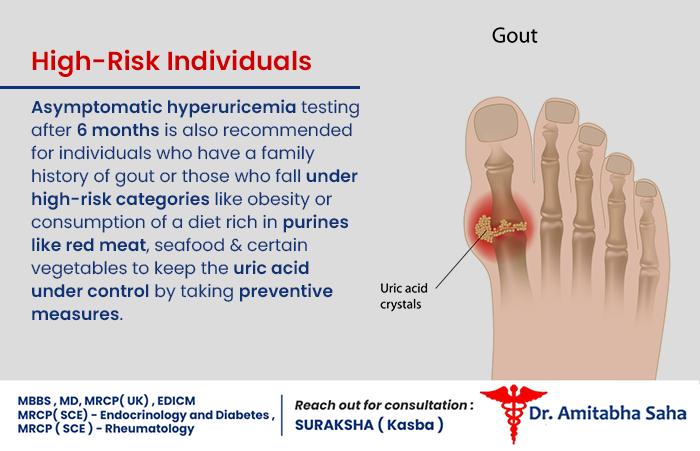
Asymptomatic hyperuricemia testing after 6 months is also recommended for individuals who have a family history of gout or those who fall under high-risk categories like obesity or consumption of a diet rich in purines like red meat, seafood and certain vegetables to keep the uric acid under control by taking preventive measures.
Monitoring your uric acid level at regular intervals is necessary for early detection and effective hyperuricemia treatment even in the absence of any symptoms. By adhering to testing guidelines and consulting a reputed general physician you can prevent major health issues associated with the condition.