It is said that in India the cuisine ‘changes with every 100 kms’. However, with the massive penetration of Western food in the country and its spread in the last 15-odd years, you can now term the meal that an average Indian, especially in the urban, consumes as local with a bit of a Western twist.
This, while there is a silent ‘pandemic’ brewing. Diabetes. And, many of us are in the thick of it. As the prevalence of diabetes continues to rise, globally, so does the need for managing the illness from a nutritional standpoint, Indian or Western.
These food landscapes, however, can be quite daunting for people with diabetes. In this article, we will explore different aspects of dealing with diabetes through diet by going through the traditional Indian eating habits as well as the Western ones.
Diabetes is a chronic disease caused by faulty carbohydrate metabolism regulation in the body which results in above normal blood sugar levels. It is, therefore, key to manage the disease by keeping glucose, colloquially known as ‘sugar’, concentrations within normal range. Diet control remains at the forefront alongside pharmacotherapy and lifestyle changes to avoid diabetes-related complications.
Indian food is well known worldwide for its vibrant taste profiles coupled with diverse cooking methods used across different parts of the country.
What makes up most dishes here includes rice, lentils or wheat alongside a wide range of vegetables and animal proteins. While, mostly, they provide a balanced nutrition, there are some drawbacks associated with them, especially for someone diagnosed with ‘sugar’ problems. Most are on the higher spectrum of the glycemic index chart, and the end consumable food is also, mostly, made with a dollop of clarified butter (ghee) or some kind of heavy oil. And, sweets are a must in many meals.
The glycemic index (GI) is basically a numerical ranking system with 0 to 100 assigned to a food to measure how fast it can raise blood glucose levels. Food with high GI markers gets digested and absorbed quickly in the body causing a sharp rise in blood sugar. Low GI foods generally take more time to get digested.
One needs to make smart choices about what to eat. Some examples of these wise decisions include going for grains like brown rice (lower glycemic index) instead of white rice or whole wheat instead of refined wheat (all-purpose) flour among many others. Brown rice, whole wheat etc, with lower GI, take longer to digest therefore keeping glucose levels stable throughout the day while still making you feel full.
Greens like chickpeas, which are high in proteins, also are a great catch. They will fill you without increasing sugar levels by too much. Simply put, people living with diabetes must remain careful about the food they consume while keeping a check on portion sizes as well as the cooking methods and other factors.
Here is a simple go-to list of diabetes-friendly and unfriendly food:
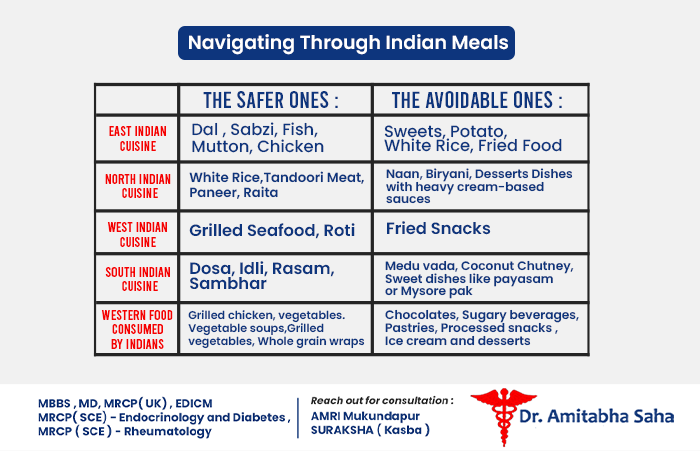
The Safer Ones:
Dal (Lentils): Contains protein and fibre that help to control blood sugar levels.
Sabzi (Vegetables): Green veggies are rich in important nutrients with low calories and carb contents.
Fish: Is made up of mainly white meat and Omega-3 fat.
Mutton: Healthy choices are the lean cuts, which provide proteins as well as other vital nutrients.
Chicken: No fat and full of proteins— chicken without skin can be a good source of protein for people living with diabetes.
The Avoidable Ones:
Sweets: East Indian sweets such as rosogolla, jalebi and others contain high sugar content. It is better to avoid them.
Potato: Contains high carbohydrates that can increase blood sugar levels; However, boiled or baked ones consumed in moderation are still okay. Not the fried ones though.
White Rice: Very high on the glycemic index spectrum.
Fried Food: Samosas, pakoras etc. contain saturated fat.
The Safer Ones:
Chapatti (whole wheat roti): Complex carbohydrates and dietary fibre.
Tandoori Meat: High on protein.
Paneer (Indian Cheese): Made from full-fat cow or buffalo milk, proteins can be found in abundance in paneer. Carbs are a few.
Raita (yogurt with vegetables): Protein as well as probiotics comes in abundance which help manage blood glucose levels.
The Avoidable Ones:
Naan: Similar to white rice, naan, a form of bread, is a highly refined flour product with a high glycemic index.
Biryani: Biryani consists of loads of added fats/ oil which can easily push up blood sugar levels.
Dishes with heavy cream-based sauces: Creamy dressings have very high fat content and calories not ideal for diabetics.
Desserts: These are high in sugar and hence can lead to a fast increase of glucose levels in the bloodstream.
The Safer Ones:
Grilled Seafood: Without heavy sauces, seafood rich in protein and low carbohydrates often works best for diabetes control.
Roti: A staple in Western Indian households, roti, mainly from whole wheat and also from the flour of millet, maize, jowar and bajra is better than white flour bread when it comes to managing diabetes.
The Avoidable Ones:
Fried Snacks: Coming in various forms, fried snacks with excessive carbs and fat increase blood sugar levels.
The Safer Ones:
Dosa: Prepared from fermented lentil batter and rice flour, dosa contains fewer carbs compared white rice dishes.
Idli: Idli is made of fermented dough with rice and lentils as primary ingredients, same as dosa.
Rasam: Low on carbohydrates.
Sambhar (lentil and vegetable stew): Contains loads of fibre and protein.
The Avoidable Ones:
Medu vada: Deep-fried and unhealthy as they come with loads of fats and carbohydrates.
Coconut Chutney: As a fruit, coconut is somewhat healthy. But the chutney version of it mostly contains sugar additives mixed with unhealthy oils.
Sweet dishes like payasam or Mysore pak: These are high in sugar and therefore should be avoided.
The Safer Ones:
Grilled chicken or fish: Better compared to their fried or processed counterparts.
Salads with leafy greens and vegetables: Salads can be good options for diabetic patients. However, without any creamy dressings.
Vegetable soups: Mostly fat-free and carry less calories as well as carbohydrates.
Grilled vegetables: Grilled mushrooms, bell peppers, brinjals, zucchini etc. have lower calories and carbs but higher fibre and antioxidants.
Whole grain wraps: With more fibres, wholemeal wraps or breads are healthier choices than their white counterparts.
The Avoidable Ones:
Fast food (Burgers, pizza, fries etc.): High in calories these usually contain unhealthy oil and fats as well as refined sugar.
Chocolates: Can be taken occasionally, especially dark chocolates with at least 70% cocoa content. Keep an eye on the portion sizes. Off-the-shelf high-sugar variants are the risky ones that can spike blood sugar levels.
Sugary beverages: Carbonated drinks, soda, sweetened iced tea, fruit juices etc. contain loads of added sugar.
Pastries and baked goods: Made of refined carbohydrates and sugar these can cause a sudden rise in blood sugar levels.
Processed snacks (chips, crackers): Snacks with high amounts of unhealthy fats along with sodium and simple sugar should not be consumed by patients suffering from diabetes.
Ice cream and desserts: Ice-creams and alternative desserts contain loads of sugar and are too high in calories.
While indulging in the vibrant tastes from the Indian palate or jumping into the influence of Western fast food, making informed choices is the key to blood sugar control. The focus should be to prioritise food with a lower glycemic index and balanced nutritional profile while eating very small portions. A great long-term approach would be to blend the culinary techniques and mould it according to your lifestyle: be it cuisines from different regions of India or Western traditions.